Most new bloggers make the same mistake — they either pick something too broad (“health and wellness”) or too personal (“my daily thoughts”). Neither works. The first drowns you in competition. The second gets no traffic.
Choosing the right niche is honestly the most important decision you’ll make before writing a single word. Get it right, and everything else — content, SEO, monetization — becomes easier. Get it wrong, and you’ll be rewriting your entire site six months in.
This guide walks you through exactly how to choose a niche for your blog, with a practical, research-backed process.
This post contains affiliate links. If you purchase through our links, we may earn a small commission at no extra cost to you. Thank you for your support!Start With What You Actually Know (Not Just What You Love)
Passion is overrated advice. “Follow your passion” sounds great until you’re writing your 40th article about a topic that gets 10 visitors a month.
The better question is: What do you know well enough to help someone with?
That’s the real starting point. Think about:
- Problems you’ve personally solved
- Skills you’ve built through work, study, or side projects
- Topics people around you regularly ask you about
- Subjects you consume obsessively — books, forums, YouTube channels
You don’t need to be a certified expert. You need to be genuinely ahead of the person searching for help. A blogger who recovered from a specific health issue, figured out a technical workflow, or built something from scratch has real experience to share — and that’s exactly what Google’s E-E-A-T guidelines reward.
I’ve seen this play out in client projects too. Sites built around real, lived knowledge tend to rank faster and convert better than sites built purely around keyword opportunity.
Validate the Niche Before You Commit
This is where most beginners skip a critical step. They assume a niche is profitable because it “sounds like a good idea.” Don’t do that.
Before committing, you need to check three things: search demand, competition level, and monetization potential.
Search demand tells you whether people are actually looking for this content. If nobody’s searching, nobody’s reading — no matter how good your writing is.
Competition level tells you whether you can realistically rank. A brand new blog going after “personal finance” or “weight loss” will struggle for years. A micro-niche within those categories is a different story.
Monetization potential tells you whether the niche can eventually earn. Some niches get great traffic but terrible ad RPMs or zero affiliate products.
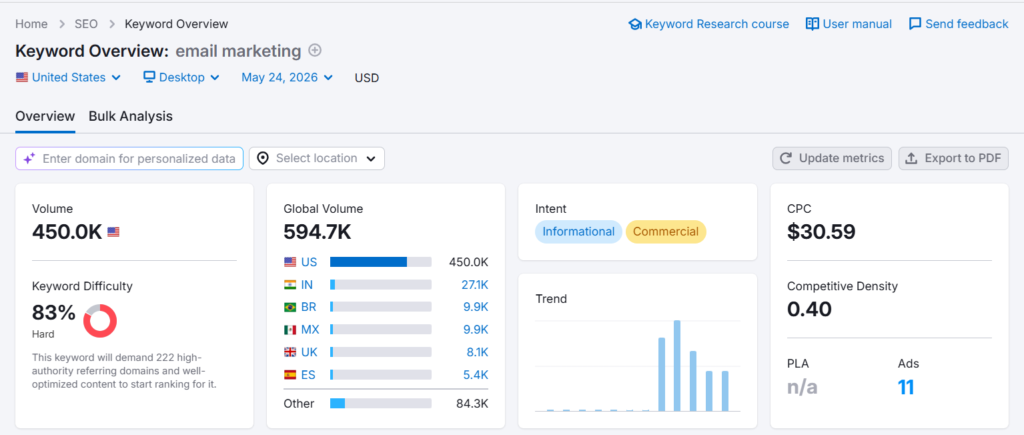
This is where a proper keyword research tool changes everything. I use Semrush for this exact stage — specifically for identifying keyword volume, keyword difficulty scores, and whether there are gaps in the market a newer site can actually target.
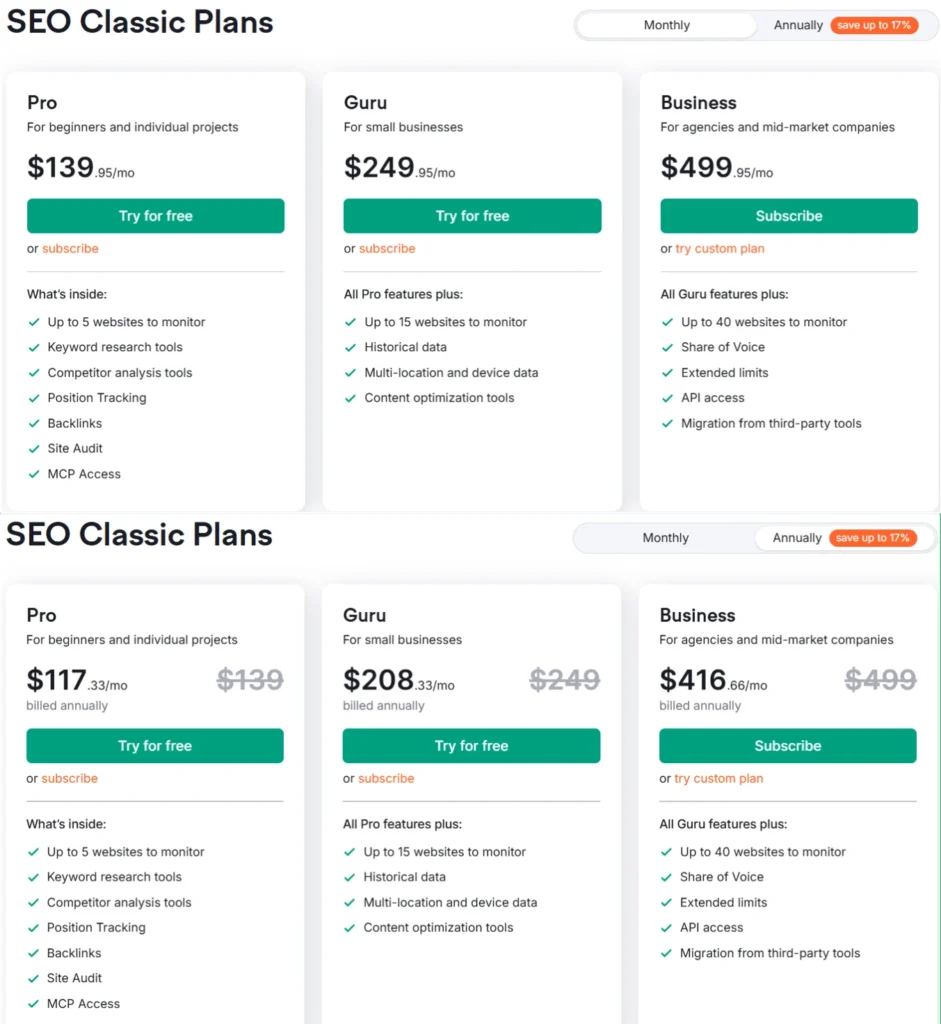
For a beginner blogger doing niche research, you don’t need the full suite. The SEO Classic Pro plan at $117.33/mo (billed annually) — or $139.95/mo if you go month-to-month — is enough to do serious keyword research and competitor analysis. It covers up to 5 websites, 500 keywords to track daily, and includes the keyword research and competitor analysis tools you’ll actually use at this stage. Both the Pro and Guru plans offer a free trial, so you can validate your niche ideas before spending anything.
How to Test If a Niche Is Too Broad or Too Narrow
This is a balance issue, and it trips up a lot of people.
Too broad: “Fitness” — you’re competing with WebMD, Healthline, and dozens of established authorities.
Too narrow: “Fitness for left-handed golfers over 60” — real, but probably not enough search volume to build a sustainable site.
The sweet spot: Something like “home workouts for busy moms” or “strength training for beginners over 40” — specific enough to rank, broad enough to build out content.
A simple way to test this: Search your niche idea on Google. If the first page is dominated by massive brand names (Wikipedia, Forbes, Healthline), you’re too broad. If you barely find 5–10 articles on the topic at all, you might be too narrow.
Then take it into Semrush’s keyword research tool. Look at the keyword difficulty score for your main topic keyword. Anything above 70 KD as your primary keyword is a tough starting point for a new site. Look for supporting keywords in the 20–50 KD range that you can build authority with first.
The Micro-Niche Approach (What Actually Works in 2026)
The blogging landscape has shifted. General-topic blogs still exist, but the ones growing fastest in organic search right now are tightly focused micro-niche sites.
A micro-niche blog covers one very specific topic in depth — becoming the go-to resource for that exact audience. Think “budget travel in Southeast Asia for solo women” instead of “travel.” Or “WordPress plugins for WooCommerce stores” instead of “WordPress.”
Why does this work?
- You build topical authority faster
- Your content naturally clusters around related keywords
- Google understands exactly what your site is about
- Your audience is more targeted, which improves conversion rates
The trade-off is volume. You’ll write fewer total articles, but each one has a better shot at ranking and sending the right visitor. The micro approach almost always outperforms broad blogging for solo creators.
Niche Validation Checklist: 5 Things to Confirm Before You Start
Don’t pick a niche until you can answer yes to most of these:
- Are there affiliate products or services in this niche? Check Amazon, ShareASale, or niche-specific programs. If there’s nothing to promote, monetization will be harder.
- Are advertisers spending money here? Google “your niche + advertise” or look at Google AdSense category RPMs. High-value niches like finance, software, and health typically earn more per 1,000 visitors.
- Can you write 50+ articles on this topic? If you’re already struggling to think of 15 ideas, the niche might be too thin.
- Are there established blogs in this niche? Counterintuitively, this is good — it means there’s money and traffic. Zero competition usually means zero demand.
- Is there a clearly identifiable audience? Know who you’re writing for. “Anyone interested in cooking” is not an audience. “First-time home cooks who want to meal prep on a budget” is.
Semrush for Niche Research: What It Actually Helps With
I want to be specific here rather than just saying “use this tool.” Here’s what I actually use Semrush for during niche selection:
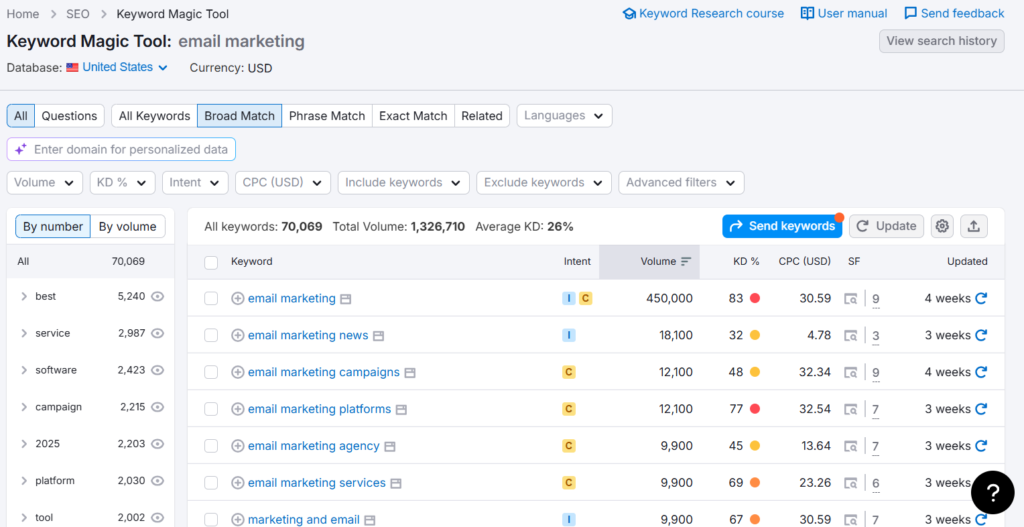
Keyword Magic Tool — Type in a broad niche idea and it generates thousands of related keyword variations with volume, difficulty, and intent data. This is where you find the hidden sub-niches competitors haven’t fully covered.
Competitor Analysis — Find a site that’s already doing well in your potential niche. Drop their domain into Semrush’s Domain Overview and see which keywords drive their traffic, what their top pages are, and where there are content gaps you can fill.
Keyword Gap — Compare your potential niche competitors side by side and find keywords multiple competitors rank for but none have fully dominated. Those are your entry points.
Topic Research — Useful for mapping out what a content cluster could look like before you commit to a niche.
For a blogger just starting with niche research, the SEO Classic plans are the practical entry point:
SEO Classic Plans — Pricing Breakdown
| Pro | Guru | Business | |
|---|---|---|---|
| Best For | Beginners & individual projects | Small businesses | Agencies & mid-market |
| Monthly Price | $139.95/mo | $249.95/mo | $499.95/mo |
| Annual Price | $117.33/mo | $208.33/mo | $416.66/mo |
| Websites to Monitor | Up to 5 | Up to 15 | Up to 40 |
| Keywords to Track Daily | 500 | 1,500 | 5,000 |
| Pages to Crawl/Month | 100,000 | 300,000 | 1,000,000 |
| Historical Data | — | ✓ | ✓ |
| Content Optimization Tools | — | ✓ | ✓ |
| JavaScript Rendering | — | ✓ | ✓ |
| API Access | — | — | ✓ |
| Free Trial | ✓ | ✓ | — |
For most bloggers doing niche research and early-stage keyword work, the Pro plan covers everything needed. Guru makes sense once you’re producing content regularly and want historical data and content optimization features. Business is for agencies managing multiple client sites.
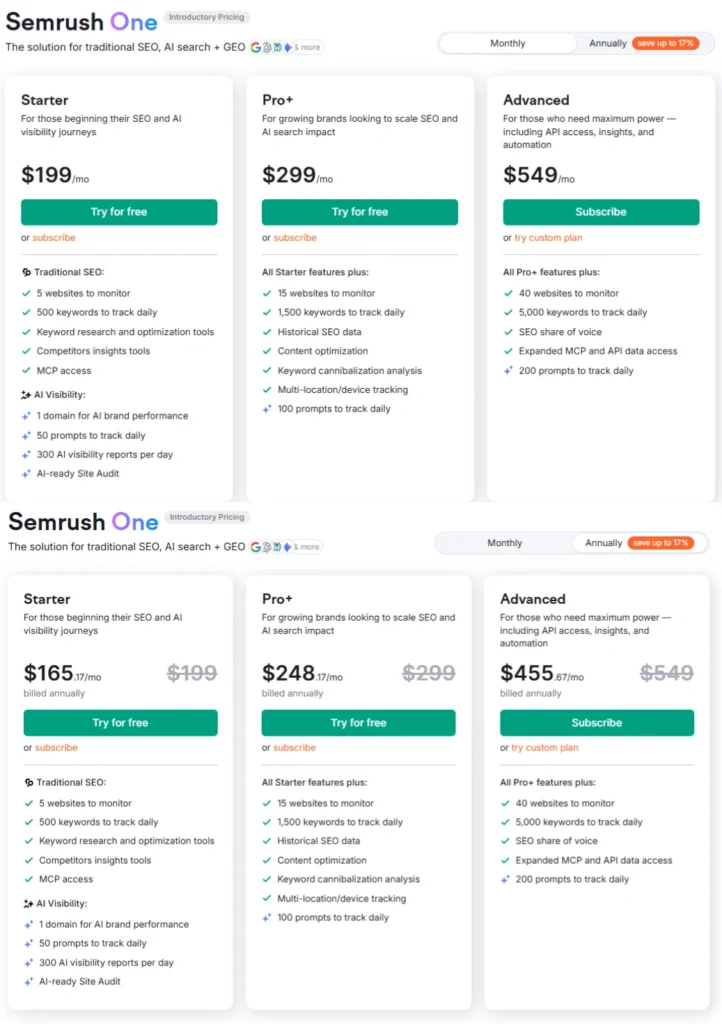
Semrush also offers a Semrush One plan line (introductory pricing) that combines traditional SEO with AI search visibility and GEO tracking:
Semrush One Plans — Pricing Breakdown
| Starter | Pro+ | Advanced | |
|---|---|---|---|
| Monthly Price | $199/mo | $299/mo | $549/mo |
| Annual Price | $165.17/mo | $248.17/mo | $455.67/mo |
| Websites to Monitor | 5 | 15 | 40 |
| Keywords to Track Daily | 500 | 1,500 | 5,000 |
| AI Prompts to Track Daily | 50 | 100 | 200 |
| AI Brand Performance Domains | 1 | 1 | 1 |
| AI Visibility Reports/Day | 300 | 300 | 300 |
| Historical SEO Data | — | ✓ | ✓ |
| API Access | — | — | ✓ |
| Free Trial | ✓ | ✓ | — |
Semrush One is worth considering if you want to track how your blog appears in AI-generated search results (ChatGPT, Perplexity, Google AI Overviews) alongside traditional SEO rankings. For pure niche research as a beginner, the SEO Classic Pro plan is the more cost-effective starting point.
Add-ons available across plans:
- Additional Users: Starting at $45/mo
- Lead Generation: $90/mo
- Base Report: $10/mo
- Pro Report: $20/mo
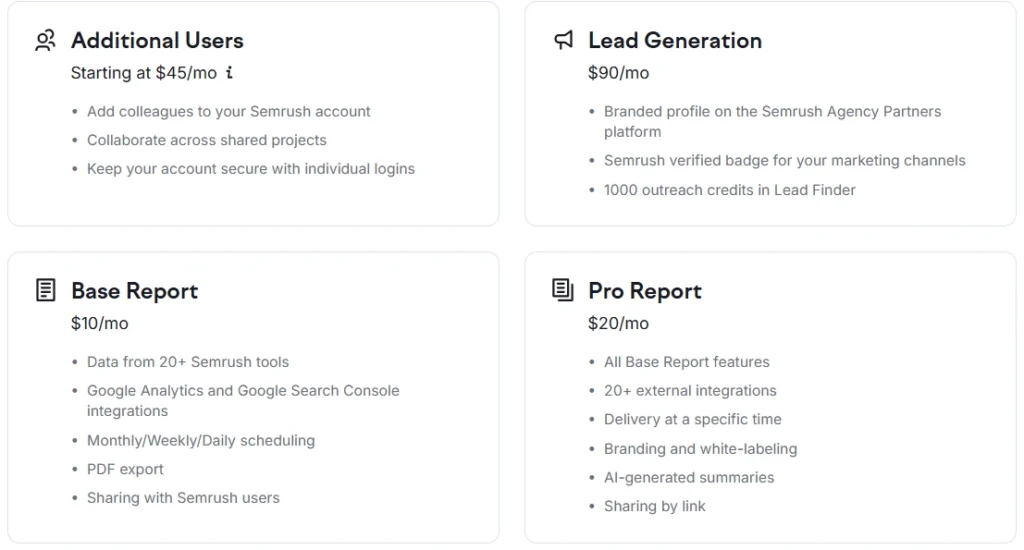
You can explore Semrush’s full plan options here and start with a free trial on Pro or Guru before committing.
Pros & Cons of Using Semrush for Niche Research
Pros
- Keyword Magic Tool generates deep niche keyword variations in seconds — genuinely useful for spotting sub-niche opportunities
- Competitor domain analysis shows exactly what’s working in your target niche, not just guesses
- Keyword difficulty scoring is reliable enough to filter out unwinnable keywords at the early stage
- Free trial on Pro and Guru means you can do a full niche validation without spending anything upfront
Cons
- The Pro plan’s 500 keyword tracking limit feels tight once your blog starts growing — you’ll hit it faster than expected
- Historical keyword data is locked behind Guru ($208.33/mo annually) — which matters when researching seasonal niche trends
- The interface has a learning curve; first-time users often don’t know where to start, which tools matter, and which to ignore
- Semrush One’s AI tracking features add cost that most beginner bloggers won’t use until their site is established
Niche Ideas That Still Have Room to Grow
Rather than listing generic categories, here are niche directions where there’s still meaningful keyword opportunity for new sites in 2026:
Specific software tutorials — Not “how to use Excel” but “Excel for small business owners” or “Google Sheets automation for freelancers.” Software niches have high affiliate potential and consistent search demand.
Local service niches — “Plumbing tips for homeowners in [region type]” or “best HVAC practices for older homes.” Local and regional angles reduce competition significantly.
Hobbyist niches with product tie-ins — 3D printing, amateur radio, urban gardening, aquariums. These have passionate audiences, affiliate products, and manageable competition.
Career and workflow niches — Remote work productivity, specific industry job search tips, freelancing in particular fields. High intent, underserved by big publishers.
Financial sub-niches — Not “personal finance” but “budgeting for single parents” or “investing on a ₹20,000/month salary.” Hyper-specific angles cut through the noise.
Once you’ve confirmed your niche, the next step is setting up the actual blog infrastructure. You’ll need to choose a blogging platform, then pick a domain name that fits your niche without boxing you in as you grow.
Who Should Skip Niche Blogging Entirely
Not everyone should build a niche blog. Be honest with yourself here.
Skip it if: You want to write about anything and everything with no specific focus. That’s a personal blog, which is fine — but it won’t generate organic search traffic or affiliate income in any meaningful way.
Skip it if: You’re picking a niche purely because it looks profitable, but you have zero interest in the subject. Writing 50+ articles about something you find boring is a grind few people finish.
Skip it if: You need income in the next 30–60 days. Niche blogs take months to gain traction. This is a 6–18 month project minimum before meaningful results.
This is right for you if: You’re willing to build something slowly, you have genuine knowledge in a specific area, and you’re thinking about sustainable long-term traffic and income rather than quick wins.
What to Do After Choosing Your Niche
Once the niche is locked in, here’s the order of operations that actually makes sense:
- Validate keyword demand — Use Semrush to confirm there’s enough search volume across 20–30 potential article ideas before you build anything.
- Set up your blog — Sign up with Hostinger as your hosting provider, then install WordPress.
- Choose a domain — Your domain should reflect the niche without limiting future growth. Check out this guide on choosing a domain name for a personal website for the right approach.
- Install a lightweight theme — GeneratePress Premium is what I use on client sites for performance.
- Set up essential plugins — Security, SEO, and caching. Here’s a walkthrough on installing the essential plugins you’ll need from day one.
- Build your content plan — Start with keyword research to map out your first 15–20 articles. This guide on the best keyword research tools covers the options worth using.
- Write and optimize — Focus on creating high-quality content before worrying about promotion, then optimize each piece for SEO.
- Plan monetization early — Even before traffic arrives, know how you’ll earn. Read through the blog monetization guide so you’re not scrambling later.
- Start promoting — Social, communities, link building. The blog promotion guide covers the strategies that actually move the needle.

Hostinger Discount Deal– Limited Time Offer!
Deal: Up to 79% OFF
Coupon Code: WPDEALSEXPERT (Extra 7% discount)
FAQ’s
How long does it take to choose a niche?
Realistically, 3–7 days if you’re being thorough. One day for brainstorming, one to two days for keyword validation in a tool like Semrush, and a day to check monetization potential and competition. Don’t rush this — a poor niche choice costs you months of work later.
Can I change my niche after starting?
You can, but it’s painful. You lose topical authority, existing content may become irrelevant, and your domain might not fit the new direction. Better to take extra time upfront than pivot after 50 articles.
Is a free niche research tool enough?
Free tools like Google Keyword Planner or Ubersuggest give you rough estimates. They’re useful for a sanity check but lack the depth — competitor analysis, keyword difficulty accuracy, and content gap data — that you need to make a confident decision. Semrush’s free trial on the Pro plan is worth using for a proper validation session before committing to a niche.
Should I choose a niche based on passion or profit?
Neither alone. The best answer is the intersection: something you know well enough to write about consistently, and that has proven search demand and monetization options. Pure passion with no market = hobby. Pure profit-chasing with no genuine knowledge = unsustainable content.
What is a micro-niche blog?
A micro-niche blog focuses on a very specific sub-topic within a broader category. Instead of “cooking,” it might be “meal prep for people with diabetes” or “Indian vegetarian recipes under 30 minutes.” The narrower focus builds topical authority faster and reduces the competition you’re fighting on day one.
How many articles do I need to write in my niche before seeing traffic?
There’s no fixed number, but a realistic benchmark is 20–30 well-optimized, genuinely useful articles before organic traffic starts building consistently. This typically takes 4–8 months, depending on niche competition and how well your content is structured for SEO.
Does Semrush offer a free trial for niche research?
Yes — both the SEO Classic Pro ($139.95/mo) and Guru ($249.95/mo) plans, as well as the Semrush One Starter ($199/mo) and Pro+ ($248.17/mo annually) plans, include a free trial. That’s enough time to do a thorough niche keyword analysis before paying anything.
Final Verdict
Choosing a niche isn’t a creative exercise — it’s a research problem. The bloggers who get it right spend more time validating than deciding, and they use real data instead of gut feeling.
Start with what you genuinely know, test it against actual search demand, check whether there’s money in the market, and go narrow enough to compete. Use a tool like Semrush to make that validation process faster and more accurate — the free trial alone is worth the time.
Get the niche right, and everything that follows becomes a lot more straightforward.