Most bloggers spend months writing content and then wonder why no money is coming in. The truth is — traffic alone doesn’t pay bills. You need the right monetization strategy matched to your blog’s current stage.
I’ve been building blogs and working on client WordPress projects for 7+ years now. Some monetization methods worked faster than I expected. Others sounded great on paper but delivered almost nothing for small blogs. This guide covers what actually works — and at what stage.
First, Get This Right Before Monetizing
Jumping into monetization too early is one of the most common blogging mistakes.
Before any method makes sense, your blog needs:
- A clear niche with buying intent
- At least 20–30 indexed posts
- Some consistent organic or referral traffic
- An audience that trusts your recommendations
If you’re still building the foundation — choosing a niche, setting up hosting, or picking a domain — get those right first. Monetization works only when the base is solid.
Once that’s done, here’s what actually earns.
1. Display Advertising — The Most Passive Income Method
This is where most bloggers start. You place ads on your blog and earn money every time someone views or clicks them.
Google AdSense is the easiest entry point. No minimum traffic requirement to apply, but realistically, you need at least 200–500 daily visitors to see meaningful earnings. RPM (revenue per thousand impressions) on AdSense typically ranges from ₹30 to ₹150, depending on your niche and audience location.
Once your blog crosses 50,000 monthly sessions, Ezoic becomes a better option. It uses AI to optimize ad placement and generally delivers 2–3x better RPM than AdSense for the same traffic. I’ve seen client blogs in the finance and tech niche earn ₹400–₹600 RPM after switching.
Mediavine requires 50,000 sessions per month minimum. AdThrive (Raptive) requires 100,000 monthly pageviews. Both deliver significantly higher earnings than AdSense for established blogs — but they’re not starter options.
One thing to keep in mind: display ads can hurt user experience and slow your site if not implemented carefully. Ezoic in particular, adds JavaScript that can affect Core Web Vitals. Worth monitoring your LCP scores after enabling any ad network.
2. Affiliate Marketing — The Highest ROI for Most Bloggers
Affiliate marketing is where most serious bloggers make the bulk of their income — and for good reason. You recommend a product, someone buys through your link, and you earn a commission. No inventory, no support, no hassle.
The key is relevance. Recommending a product that genuinely fits your content earns trust and converts. Randomly placing affiliate links destroys both.
Best affiliate programs for bloggers:
- Amazon Associates — Low commissions (1–5%) but works across almost any niche
- Hostinger, Bluehost, SiteGround — Hosting affiliates pay ₹3,000–₹15,000 per sale
- SEO tools (Semrush, Ahrefs, RankMath) — Recurring commissions in SaaS programs
- Digital product platforms (Teachable, Gumroad) — Often 30–50% commission
- ShareASale, Impact, CJ Affiliate — Networks with hundreds of programs across niches
A blog post reviewing a keyword research tool, for example, can earn ₹5,000–₹30,000/month if it ranks and the audience has buying intent. That’s one post doing the work.
If you’re still researching tools, check out this breakdown of the Best Keyword Research Tools.
Pro tip: Write comparison posts, “best of” listicles, and “vs” articles. These attract people ready to buy — not just browse.
3. Selling Digital Products — Best Long-Term Income
Once you have an audience that trusts you, selling your own product is the most profitable thing you can do. No commission split. 100% yours.
What bloggers sell:
- eBooks and PDF guides
- Templates (Notion, Canva, Excel)
- Online courses and workshops
- Presets, swipe files, checklists
- WordPress theme or plugin packs (for dev bloggers)
The margin is near 100% once the product is created. A ₹499 eBook sold to 200 people per month is ₹99,800 — recurring, without creating new content.
Platforms like Gumroad, Payhip, or WooCommerce make setup straightforward. For courses, Teachable or Thinkific handles delivery and payments cleanly.
The challenge here is that you need a warm audience first. Cold traffic rarely converts on digital products without trust built through content.
4. Sponsored Content — Works Well in Mid-Stage Blogs
Brands pay you to write about their product or feature them in your content. Payment varies wildly — from ₹2,000 for small blogs to ₹50,000+ for established ones.
This works best when:
- Your blog has a specific, identifiable niche
- You have consistent traffic (even 5,000–10,000 monthly visits can attract niche sponsors)
- Your audience matches what brands are targeting
Be transparent. Always disclose sponsored content clearly — both for reader trust and legal compliance. Google also expects this; hidden sponsorships can hurt rankings if flagged.
One practical observation from working with a client’s food blog — even at 8,000 monthly visitors, they were getting ₹5,000–₹8,000 per sponsored post from regional food brands because the niche was tight and the audience was genuinely engaged.
5. Freelance Services — Fastest Way to Earn From a Blog
Your blog is your portfolio. If you write about SEO, offer SEO services. If you build WordPress sites, your blog is proof of that skill.
This is the fastest monetization path for new bloggers because it doesn’t require huge traffic. One well-written post demonstrating real expertise can land you a client worth ₹20,000–₹1,00,000 in a single project.
Services bloggers commonly offer:
- Content writing and copywriting
- SEO consulting
- WordPress development and setup
- Blog management for other businesses
- Social media management
The downside — it’s time for money. It doesn’t scale the way passive income does. But as a starting revenue stream while building authority? It’s hard to beat.
6. Email List Monetization — Underused and Underrated
Most bloggers treat email as an afterthought. That’s a mistake.
An engaged email list of 1,000 subscribers can outperform 50,000 monthly blog visitors in terms of revenue — because these are people who actively chose to hear from you.
Ways to monetize an email list:
- Promote affiliate products directly in emails
- Launch digital products to a warm audience
- Offer exclusive paid newsletters (via Substack, Beehiiv, or Ghost)
- Announce sponsored content slots to brands
Start building your list from day one. A simple lead magnet — a checklist, a free guide, a template — placed in the right blog post can grow your list steadily. Tools like Mailchimp (free up to 500 subscribers) or ConvertKit (now Kit) work well for bloggers at any stage.
7. Membership and Community — Advanced but High Value
Once you have a loyal audience, you can charge for exclusive access.
This could be:
- A paid private community (Discord, Slack, Circle)
- Monthly membership with exclusive tutorials or resources
- Premium content behind a paywall
Platforms like Memberful, Patreon, or Paid Memberships Pro (WordPress plugin) make this manageable. Even 50 members paying ₹499/month is ₹24,950 recurring income — with zero dependency on ad networks or algorithm changes.
This takes time to build toward, but the income is the most stable of all methods listed here.
Which Monetization Method Is Right for You?
| Blog Stage | Best Strategy |
|---|---|
| 0–6 months (new blog) | Freelance services, affiliate content |
| 6–12 months (growing) | AdSense + affiliate marketing |
| 1–2 years (established) | Ezoic/Mediavine + affiliate + digital products |
| 2+ years (authority site) | Digital products + membership + premium ads |
No single strategy works for everyone. Your niche, audience size, and personal skills determine what fits best.
Common Mistakes That Kill Blog Monetization
- Monetizing too early — Putting ads on a 5-post blog destroys trust
- Choosing low-paying niches — “Pet memes” won’t pay like “personal finance.”
- Ignoring email from day one — Biggest regret for most bloggers
- Over-relying on one income stream — Algorithm updates can wipe one stream overnight
- Promoting irrelevant affiliates — A health blog promoting VPN services makes no sense
The Full Blogging Journey (Where Monetization Fits)
Monetization doesn’t exist in isolation. It’s the final layer of a system that starts with choosing the right niche and building a technically solid blog.
If you’re earlier in the journey, these resources cover each step:
- How to Choose a Niche — Start here before anything else
- How to Choose a Blogging Platform — WordPress vs alternatives
- How to Choose the Perfect Domain Name
- How to Sign Up with Hostinger — Hosting setup walkthrough
- How to Install WordPress in Hostinger
- How to Install GeneratePress Premium — Fast, clean theme setup
- How to Install Essential Plugins
- Create High-Quality and Engaging Content
- How to Optimize Your Content for SEO
- How to Promote Your Blog
Each step builds toward a blog that can actually earn.
My Real Blogging Income — What I’ve Actually Earned
I don’t like giving advice I haven’t lived through. So here’s what blog monetization has actually looked like for me over the years — real numbers, not estimates.
Google AdSense has been my longest-running income stream. Since 2018, my multiple blogs have collectively earned around $40,000 from AdSense across multiple properties. I run several sites, so consolidating proof into one screenshot isn’t practical — but the number is real, and it came from consistent publishing, SEO optimization, and patience. AdSense alone won’t make you rich quickly, but compounded over years across well-optimized content? It adds up more than most beginners expect.
Amazon Associates is something I use selectively — I don’t build content around it aggressively, but it earns passively wherever product recommendations naturally fit. Here’s what that “casual” usage has generated:
- January 2024: ₹8,808.06
- April 2024: ₹1,180.20
- April 2025: ₹1,204.50
- 2026 (ongoing): ₹716.59 upcoming payment
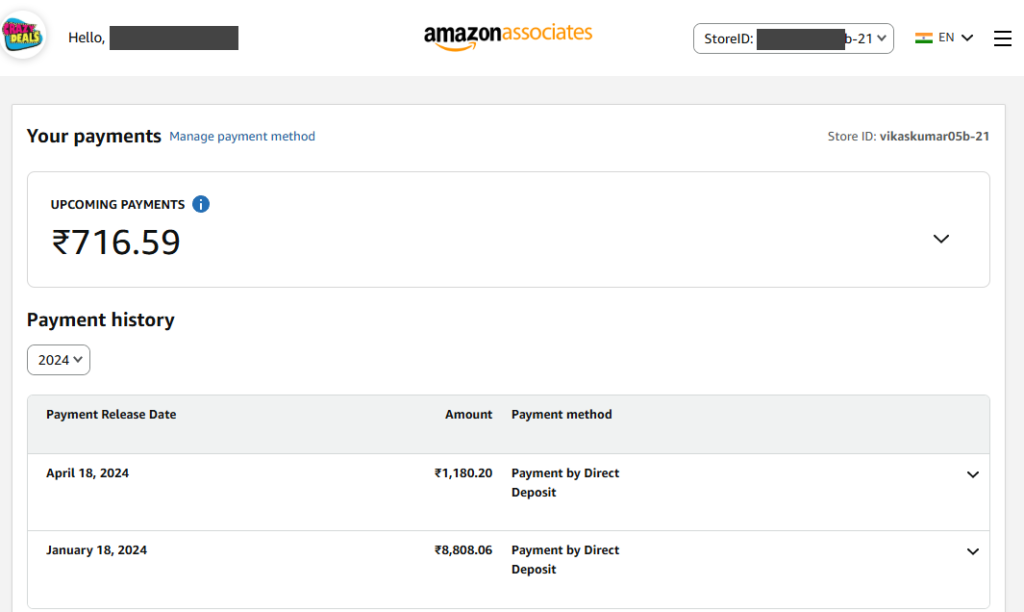
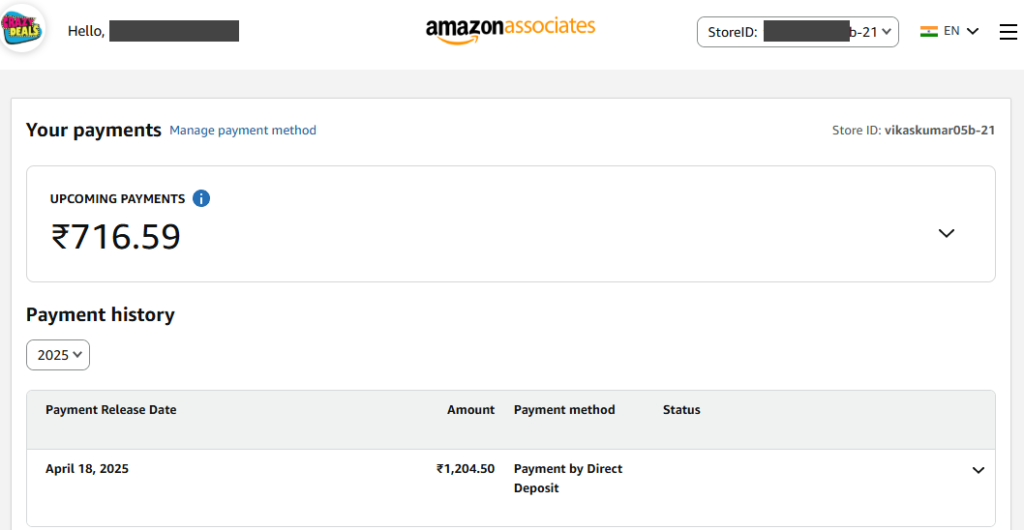
Not life-changing on its own — but this is from a program I barely push. For bloggers who build content specifically around Amazon-compatible niches, the numbers scale considerably.
Affiliate marketing through Impact.com is where the more meaningful commissions come from. Between January 2025 and May 2026, here’s what some of those partnerships earned:
| Brand | Amount Earned |
|---|---|
| Semrush | ₹1,03,849.17 + ₹1,711.78 |
| Liquid Web | ₹93,432.18 |
| Airslate | ₹24,298.64 |
| Hostinger International | ₹19,733.23 |
| InVideo | ₹16,849.01 |
| SITE123 LTD | ₹16,390.67 |
| Nextiva | ₹4,043.35 |
| Tailwind | ₹2,214.64 |
| Envato Pty Ltd | ₹1,597.97 + ₹1,771.69 |
| DigitalOcean | ₹700.16 |
| Social Catfish LLC | ₹971.46 |
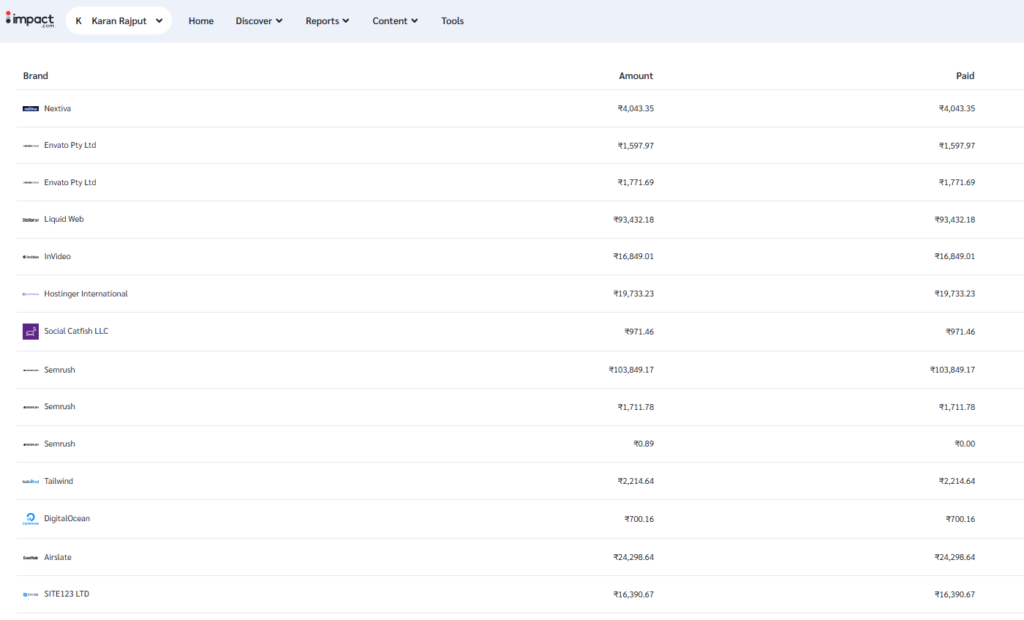
Semrush alone crossed ₹1 lakh in that period — from review and comparison content that ranks and keeps converting without me touching it.
The pattern across all of this is straightforward: the content that earns the most is content written for people who are close to a buying decision — comparisons, reviews, and “best of” posts in niches with real commercial intent. Traffic volume matters less than traffic quality.
I’m not sharing this to impress — I’m sharing it because when I started, I would have made better decisions faster if someone had shown me real numbers instead of vague possibilities.
Frequently Asked Questions
How much traffic do I need before monetizing my blog?
There’s no hard rule, but display ads make sense only after 200–500 daily visitors. Affiliate marketing and freelance services can start much earlier — even with 50–100 daily visitors — because they depend on intent, not volume.
Which monetization method earns the most for Indian bloggers?
Affiliate marketing consistently delivers the highest return for most Indian bloggers — especially in niches like hosting, finance, and SaaS tools. The commissions are high, and buying-intent traffic converts even at low volumes.
Can I use multiple monetization methods on the same blog?
Absolutely. Most successful blogs use 3–4 income streams simultaneously. Just make sure they don’t compete with or confuse your readers — for example, placing too many ads on a page where you’re also trying to convert affiliate clicks will hurt both.
Is Google AdSense still worth it in 2026?
For beginners, yes — it’s easy to set up and requires no audience negotiation. But for blogs with 50,000+ sessions/month, Ezoic or Mediavine will earn significantly more. AdSense is a starting point, not a long-term strategy for high-traffic blogs.
How long does it take to earn money from a blog?
Realistically, expect 6–12 months before meaningful income starts — and that’s with consistent publishing and proper SEO. Some bloggers earn small amounts in 3–4 months through affiliate marketing or services. Passive income from ads and products usually takes longer to build.
Do I need a huge audience to sell digital products?
No. A small but engaged audience converts better than a large indifferent one. Some bloggers make ₹50,000+/month selling to a list of under 2,000 subscribers because the content and trust match perfectly.
Final Verdict
Blog monetization isn’t a single switch you flip — it’s a system you build layer by layer.
Start with affiliate marketing and freelance services while your blog grows. Add display ads once traffic justifies it. Build your email list from day one. Then, when you have an audience that trusts you, launch your own digital product.
The bloggers earning consistently aren’t doing anything exotic. They picked the right niche, built trust through real content, and layered income streams over time. That’s the playbook — and it still works in 2026.